How Does a Rear Bumper Bracket Support Vehicle Safety and Structural Integrity?
Article Abstract
A Rear Bumper Bracket is a core structural component used to secure the rear bumper assembly to the vehicle body, ensuring alignment, load distribution, and long-term durability.
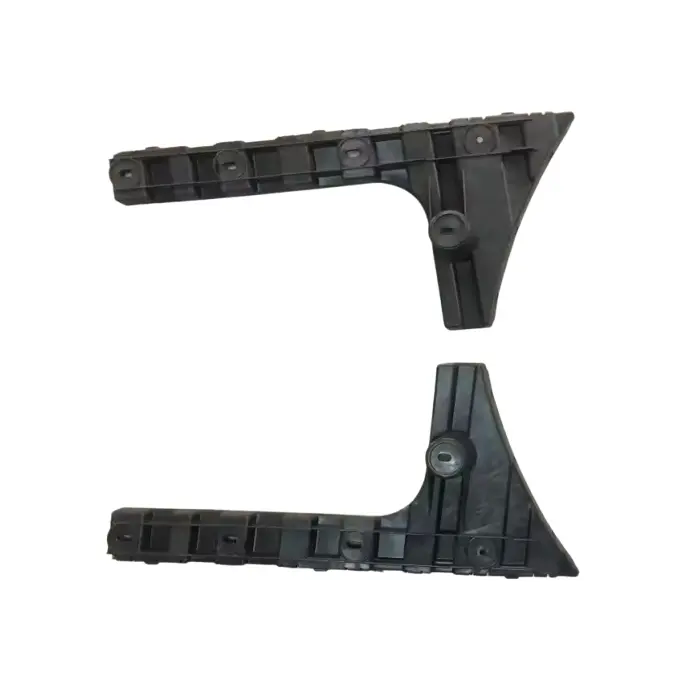
Table of Contents
- How Is a Rear Bumper Bracket Defined and Applied in Modern Vehicles?
- How Do Technical Parameters Determine Rear Bumper Bracket Performance?
- How Should Rear Bumper Brackets Be Selected and Installed Correctly?
- How Is the Rear Bumper Bracket Market Developing in the Future?
Content Outline
- Product overview and structural role
- Detailed material and dimensional parameters
- Installation logic and compatibility considerations
- Frequently asked technical questions
- Manufacturing trends and market outlook
How Is a Rear Bumper Bracket Defined and Applied in Modern Vehicles?
A Rear Bumper Bracket is a mechanical mounting component designed to connect the rear bumper cover and reinforcement beam to the vehicle’s body structure. It plays a critical role in maintaining bumper positioning, absorbing minor impacts, and ensuring compliance with automotive assembly tolerances. Without a properly engineered Rear Bumper Bracket, bumper deformation, misalignment, and long-term fatigue issues may occur.
In passenger vehicles, commercial vehicles, and light trucks, Rear Bumper Brackets are typically installed at multiple mounting points along the rear frame rail or rear body panel. These brackets ensure that impact forces are distributed evenly during low-speed collisions and that the bumper system remains stable under vibration, temperature fluctuation, and road stress.
From an application perspective, Rear Bumper Brackets are used across:
- Sedans and hatchbacks
- SUVs and crossovers
- Pickup trucks and vans
- Aftermarket bumper replacement systems
The global demand for Rear Bumper Brackets continues to increase due to rising vehicle ownership, stricter vehicle repair standards, and the growth of the automotive aftermarket sector.
How Do Technical Parameters Determine Rear Bumper Bracket Performance?
The performance of a Rear Bumper Bracket is defined by its engineering parameters, material selection, and dimensional accuracy. These factors directly affect load-bearing capacity, corrosion resistance, and service life.
Below is a consolidated overview of common Rear Bumper Bracket technical parameters:
| Parameter | Specification Range | Technical Significance |
|---|---|---|
| Material Type | High-strength steel / Aluminum alloy / Reinforced polymer | Determines impact resistance and weight balance |
| Surface Treatment | Electroplating, powder coating, e-coating | Improves corrosion resistance and durability |
| Thickness | 1.2 mm – 3.5 mm | Affects load distribution and deformation tolerance |
| Mounting Hole Tolerance | ±0.1 mm – ±0.3 mm | Ensures precise alignment during assembly |
| Operating Temperature | -40°C to +90°C | Maintains stability in diverse climates |
Precision manufacturing is essential for Rear Bumper Brackets, as even minor deviations in geometry may lead to improper bumper alignment. Modern production techniques such as CNC stamping, laser cutting, and robotic welding are commonly applied to achieve consistency and scalability.
Rear Bumper Bracket Common Questions and Answers
Q: How does a Rear Bumper Bracket differ from a bumper reinforcement?
A: A Rear Bumper Bracket serves as a mounting and positioning component, while a bumper reinforcement is designed primarily for energy absorption during collisions. Both work together within the bumper system.
Q: How can compatibility of a Rear Bumper Bracket be verified?
A: Compatibility is determined by vehicle model, production year, OEM reference number, and mounting geometry. Accurate matching ensures proper fit and structural performance.
Q: How long is the typical service life of a Rear Bumper Bracket?
A: Under normal driving conditions and proper corrosion protection, a Rear Bumper Bracket can last over ten years without structural degradation.
How Should Rear Bumper Brackets Be Selected and Installed Correctly?
Selecting the correct Rear Bumper Bracket requires a systematic evaluation of vehicle specifications, material requirements, and regulatory standards. Automotive repair professionals and distributors typically prioritize dimensional accuracy, surface treatment quality, and mechanical strength.
Installation procedures for Rear Bumper Brackets generally follow these principles:
- Alignment with factory mounting points
- Torque-controlled fastening
- Verification of bumper gap consistency
- Post-installation vibration inspection
Improper installation may result in noise, uneven bumper gaps, or premature wear. Therefore, standardized installation guidelines and quality inspections are critical for maintaining vehicle integrity.
How Is the Rear Bumper Bracket Market Developing in the Future?
The Rear Bumper Bracket market is undergoing steady transformation driven by lightweight design requirements, electric vehicle architecture, and global supply chain optimization. Manufacturers are increasingly adopting aluminum alloys and composite materials to reduce vehicle weight while maintaining structural reliability.
Automation and digital quality control systems are also reshaping production efficiency. As electric and hybrid vehicles gain market share, Rear Bumper Bracket designs are evolving to accommodate new rear layouts, battery enclosures, and sensor integration.
Within this context, Ningbo YC factory has established itself as a reliable manufacturing source by focusing on stable production capacity, strict dimensional control, and material traceability. Its Rear Bumper Bracket solutions are supplied to both OEM-supporting channels and international aftermarket distributors.
For procurement inquiries, technical consultations, or custom specification requirements related to Rear Bumper Brackets, interested partners are encouraged to contact us for detailed product information and professional support.
Related News
- Why Is the Front Headlight for Geely Atlas Pro Essential for Safety and Style
- Why Is the Front Bumper for Chery EXEED LX an Essential Upgrade for Your Vehicle
- Why Is a Fender for Geely EMGRAND Essential for Vehicle Protection and Style
- Why Are Daily Running Lights for GWM HAVAL Jolion Essential for Safety and Style
- Why is the Rear View Mirror for Changan Alsvin Essential for Your Vehicle
- Why is the Headlight for JAC JS4 a Must-Have Upgrade for Your Vehicle
Leave me a message