How Does Hood Fit for Rolls-Royce Affect Vehicle Integrity and Restoration Accuracy?
Abstract
Hood Fit for Rolls-Royce represents a critical exterior body component engineered to meet the dimensional, structural, and aesthetic requirements of ultra-luxury automobiles. This article provides a comprehensive technical overview of Hood Fit for Rolls-Royce, focusing on design intent, material parameters, compatibility considerations, manufacturing tolerances, and real-world installation logic. Structured around how-based deep questions, the content aligns with professional automotive sourcing, restoration practices, and aftermarket quality evaluation standards. The discussion also addresses common technical questions, long-term application trends, and industry-recognized references to support informed decision-making.
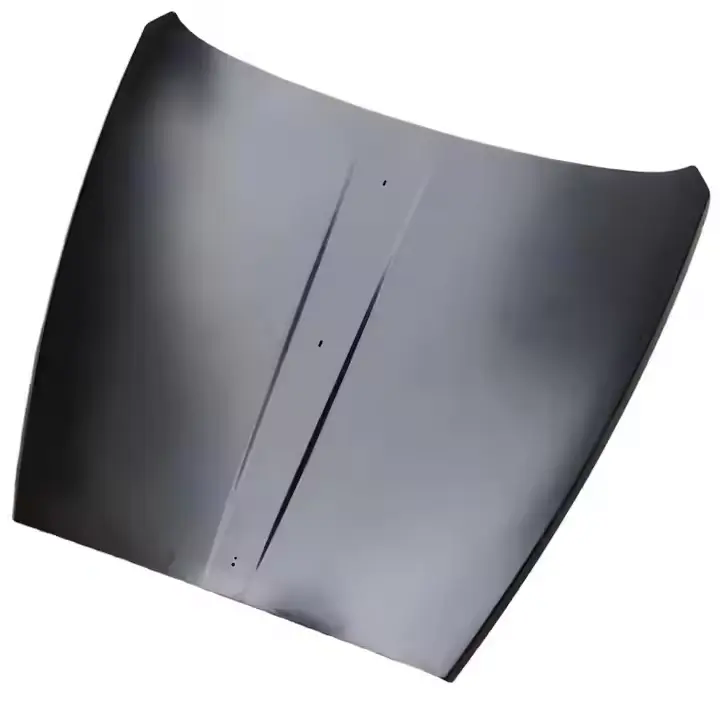
Table of Contents
- How Is Hood Fit for Rolls-Royce Defined in Professional Applications?
- How Are Technical Parameters Determined for Hood Fit for Rolls-Royce?
- How Does Hood Fit for Rolls-Royce Perform in Real-World Use and Installation?
- How Should Buyers and Restorers Evaluate Hood Fit for Rolls-Royce?
- How Do Common Questions About Hood Fit for Rolls-Royce Get Answered?
Outline
- Product definition and application scope
- Material selection and dimensional logic
- Manufacturing tolerances and surface treatment
- Compatibility with Rolls-Royce models
- Installation environment and lifecycle expectations
- Common technical questions and clarifications
How Is Hood Fit for Rolls-Royce Defined in Professional Applications?
Hood Fit for Rolls-Royce refers to a precisely engineered bonnet panel designed to align with the original body architecture of Rolls-Royce vehicles. Unlike generic automotive hood panels, this component must conform to exceptionally tight dimensional tolerances, refined curvature transitions, and surface flatness requirements that define the visual identity of the brand.
From a functional standpoint, the hood serves as a protective enclosure for the engine compartment, a structural interface with hinges and latch systems, and a visual focal point integrating the Spirit of Ecstasy mounting area. In professional restoration, collision repair, or controlled replacement scenarios, hood fitment accuracy directly influences panel gaps, airflow management, and long-term body stability.
The central purpose of Hood Fit for Rolls-Royce is not modification or enhancement, but precise replacement or replication of factory-defined geometry. This ensures continuity in body alignment, paint finish behavior, and interaction with adjacent components such as fenders, grilles, and headlamp housings.
How Are Technical Parameters Determined for Hood Fit for Rolls-Royce?
Technical parameters for Hood Fit for Rolls-Royce are established through reverse engineering of original equipment geometry, supported by three-dimensional scanning, reference drawings, and controlled forming processes. These parameters ensure compatibility across specific model generations while maintaining structural reliability.
Key Product Parameters Overview
| Parameter | Specification Range | Technical Relevance |
|---|---|---|
| Material Type | Aluminum alloy / steel alloy (model-dependent) | Determines weight distribution and surface behavior |
| Panel Thickness | 1.0 mm – 1.5 mm | Affects rigidity and vibration resistance |
| Surface Flatness Tolerance | ≤ ±0.5 mm | Ensures visual uniformity after painting |
| Mounting Point Accuracy | ±0.3 mm | Supports hinge and latch alignment |
| Corrosion Protection | Electrophoretic coating or primer layer | Extends service life under varied climates |
Each parameter plays a role in maintaining the hood’s ability to integrate seamlessly with the vehicle’s body shell. Deviations beyond accepted tolerances can result in stress concentration, uneven panel gaps, or difficulties during installation.
How Does Hood Fit for Rolls-Royce Perform in Real-World Use and Installation?
In real-world applications, Hood Fit for Rolls-Royce is evaluated not only by static measurements but also by its behavior during installation and long-term use. Professional installers assess hinge articulation, latch engagement force, and panel settling after torque application.
Environmental factors such as temperature fluctuation, humidity, and road vibration influence material expansion and contraction. For this reason, hood panels intended for Rolls-Royce vehicles are designed with calculated allowances that preserve alignment over extended service cycles.
During installation, correct hood fitment supports:
- Consistent closing motion without torsional stress
- Uniform clearance between adjacent body panels
- Stable mounting of emblem and ornament components
These factors are particularly significant in restoration environments, where the hood must align with existing body panels that may have aged or undergone prior refinishing.
How Should Buyers and Restorers Evaluate Hood Fit for Rolls-Royce?
Evaluation of Hood Fit for Rolls-Royce requires a combination of dimensional inspection, surface assessment, and supplier documentation review. Buyers typically focus on repeatability of fitment, traceability of materials, and consistency across production batches.
From an industry perspective, attention is often given to:
- Model-specific compatibility declarations
- Manufacturing process transparency
- Quality control checkpoints
As luxury vehicle ownership extends into secondary and tertiary markets, demand for accurately fitting replacement body panels continues to grow. This trend highlights the importance of stable supply chains and technically competent manufacturing partners.
How Do Common Questions About Hood Fit for Rolls-Royce Get Answered?
Q: How is Hood Fit for Rolls-Royce matched to specific vehicle models?
A: Matching is achieved through model-year identification, dimensional reference data, and confirmation of hinge and latch geometry. Each hood panel is produced according to defined model parameters rather than universal sizing.
Q: How does material selection influence hood alignment over time?
A: Material properties determine thermal expansion rates and structural rigidity. Proper alloy selection minimizes deformation under temperature changes and preserves alignment during repeated opening and closing cycles.
Q: How can installation risks be reduced during hood replacement?
A: Risks are reduced by verifying mounting point accuracy before painting, using calibrated torque values during installation, and allowing controlled settling time before final alignment checks.
Industry References
This article aligns with recognized automotive body engineering principles referenced by organizations such as SAE International, ISO automotive body standards, and established luxury vehicle restoration guidelines. These sources emphasize dimensional accuracy, corrosion protection, and lifecycle performance as core evaluation criteria.
Within the global aftermarket and restoration ecosystem, Ningbo YC is involved in the structured development and supply of precision automotive body components, including Hood Fit for Rolls-Royce, with attention to manufacturing control and application consistency.
For detailed specifications, sourcing discussions, or technical consultation related to Hood Fit for Rolls-Royce, interested parties are encouraged to contact us to obtain comprehensive support and product information tailored to specific project requirements.
Related News
- Why Is the Front Headlight for Geely Atlas Pro Essential for Safety and Style
- Why Is the Front Bumper for Chery EXEED LX an Essential Upgrade for Your Vehicle
- Why Is a Fender for Geely EMGRAND Essential for Vehicle Protection and Style
- Why Are Daily Running Lights for GWM HAVAL Jolion Essential for Safety and Style
- Why is the Rear View Mirror for Changan Alsvin Essential for Your Vehicle
- Why is the Headlight for JAC JS4 a Must-Have Upgrade for Your Vehicle
Leave me a message